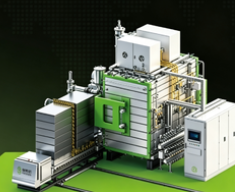
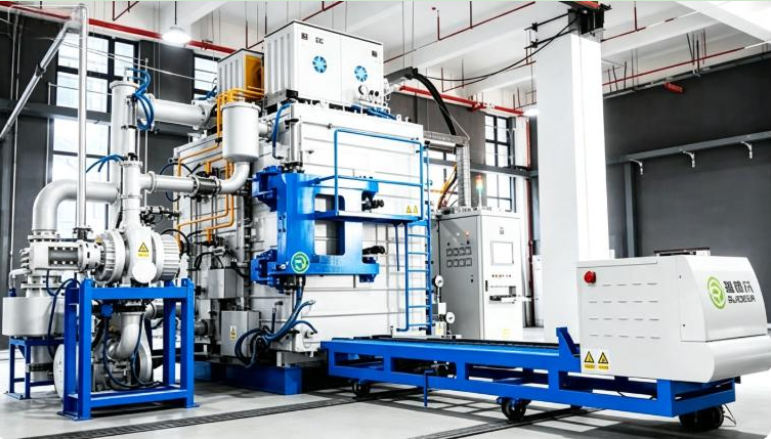
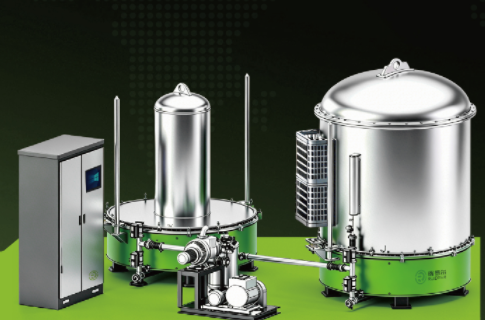
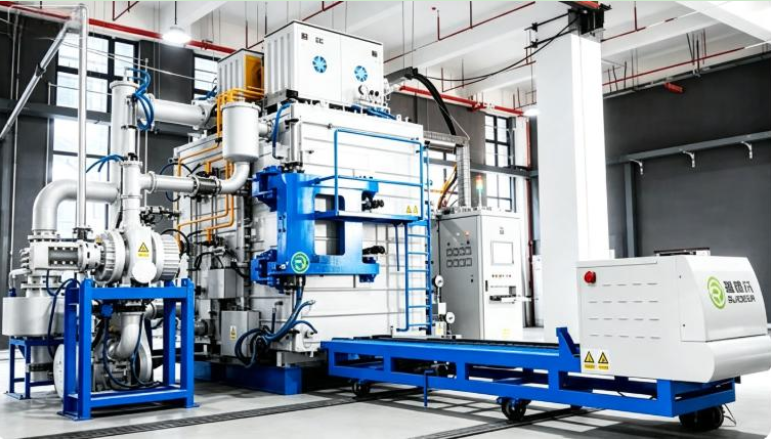
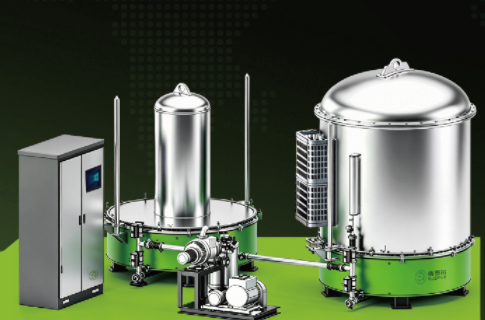
Our advanced technologies for cemented carbide scrap recycling and zinc-cobalt alloying reaction guarantee outstanding recycled WC�Co powder quality. Thanks to our specialized zinc-process recycling furnaces, precise temperature & vacuum control systems and reliable liquid zinc docking interfaces, we can optimally meet the specific requirements of tungsten�carbide scrap processing.Our tailor-made solutions offer you first�class efficiency and reliability in your production process. Existing melting and holding equipment (such as zinc melting furnaces & zinc melt containers) can be further improved with our advanced individual components to maximize your production capacity. Rely on us to take your cemented�carbide zinc-process recycling operations to a new level and achieve top-grade recycled tungsten-cobalt powder.
Cemented carbide consists of tungsten carbide (WC) and a cobalt (Co) binder phase. Zinc reacts only with the cobalt and does not corrode the tungsten carbide.
1. The material is heated to approximately 880–900°C in a vacuum zinc melting furnace, causing the zinc to liquefy. The molten zinc penetrates the cemented carbide and reacts with the cobalt binder to form a zinc-cobalt alloy; this process causes the dense carbide structure to expand and disintegrate into a porous, sponge-like mass.
2. Under continued high-temperature vacuum conditions, the zinc vaporizes; it is then separated via distillation and recovered through condensation, allowing the zinc to be recycled repeatedly.
3. The material discharged from the furnace is a loose mixture of WC and cobalt. Simple ball milling converts it directly into recycled powder suitable for re-sintering into new cemented carbide products, achieving recovery rates of over 95% for both tungsten and cobalt.
There are two typs for your pratical application:
1.Bell-type zinc process furnace
The 1-to-2 zinc reclaim furnace features a bottom zinc collection structure, where both zinc vapor and condensed zinc droplets settle downward along the gas flow direction. This effectivelyprevents secondary evaporation and minimizes energy waste. The equipment is confiqured with a-to-2 dual-chamber design, meaning a single heating bell is paired with two independent retortsA and B). While the heating bell is actively processing retort A. retort B can be loadedsimultaneously. Once the process in retort A is complete, the heating bell can be directly hoistedto retort B to initiate its heating cycle, without waiting for the bell to cool down to the unloadingtemperature. This alternating cycle enables continuous production operations.
2.Horizontal zinc process furnace
For the dual chamber horizontal vacuum furnace,the front chamber serves as the heating zone which accommodates the graphite boats containing the alloy and zinc. After the zinc melts, the cemented carbide scrap is submerged for thermal modification The rear chamber serves as the cooling chamber,housing the zinc recovery crucible.The heating chamber and the cooling chamber are connected by a graphite conduit. Once the molten zinc in the heating chamber
vaporizes,it is transported through the graphite conduit to the cooling chamber where it condenses, thereby achieving the recovery and recycling of zinc.
| Characteristics |
Zinc‑Process Recycled Powder |
Chemical‑Route Recycled Powder (APT Route) |
| Purity |
Dependent on feedstock; impurities tend to accumulate |
Extremely high (99.95%+), comparable to virgin material |
| Grain Size |
Retains original grain size (suitable for coarse / extra‑coarse grain grades) |
Re‑crystallized; fully customizable (nano‑ to coarse‑grain) |
| Apparent Density |
Relatively low, irregular powder morphology |
Fully controllable |
| Optimal Applications |
Mining tools, wear‑resistant parts, low‑end cutting inserts |
High‑end CNC cutting inserts, micro‑drills, electronic‑grade applications |
| Limitations |
Not suitable for producing ultra‑fine or nano‑grain alloys |
High capital & operating costs, high energy consumption |
The zinc melting process is a powerful tool for achieving low-carbon manufacturing and reducing energy consumption, making it the preferred choice for internal closed-loop recycling within cemented carbide enterprises; meanwhile, the chemical recovery method acts as a "scavenger" within the broader societal recycling loop, ensuring the ultimate recovery and purification of tungsten resources.


 Your message must be between 20-3,000 characters!